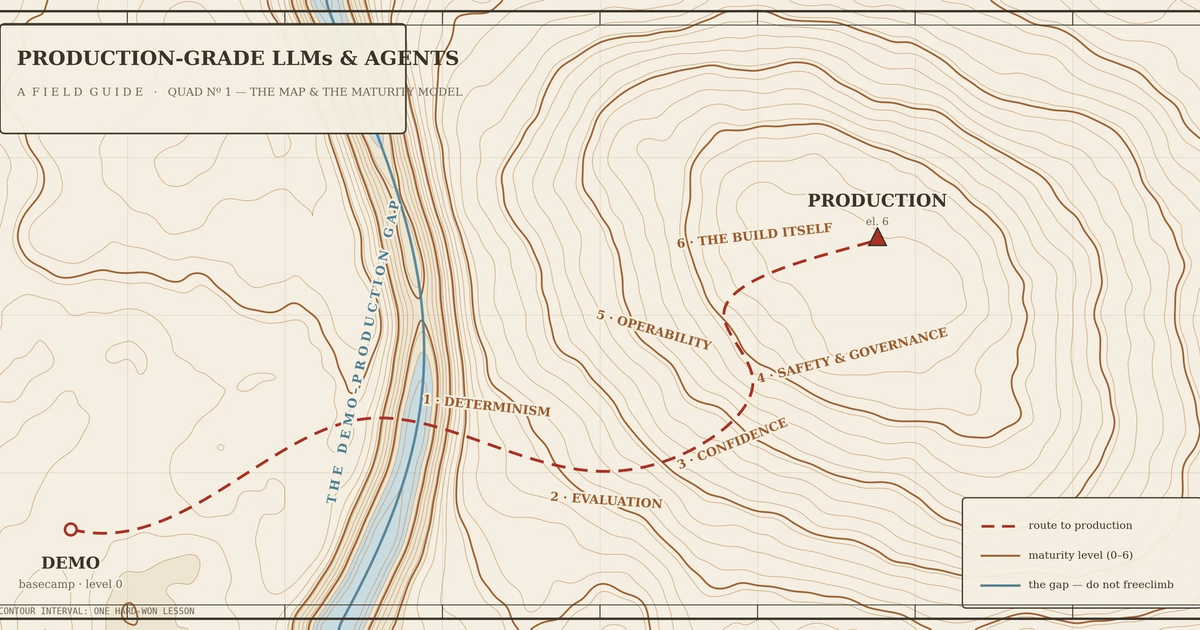
There’s a canyon between an agent that demos well and an agent you’d put in front of customers or money. Crossing it isn’t about a bigger model — it’s the boring machinery around the model: determinism, evaluation, calibrated confidence, layered guardrails, an audit trail, and observability. This post is the map and the maturity model. Each layer links to a focused deep-dive.
LLMs are probabilistic; production demands guarantees. You get guarantees not by making the model deterministic (you can’t) but by shrinking the model’s job to the smallest decision that needs judgment, then wrapping that decision in deterministic machinery you can test, gate, audit, and observe. The model is one contained component in an otherwise ordinary, well-engineered system.
Levels you climb, each assuming the one below.
The level — What you have· The tell for gaps
- 0 – Notebook — a prompt, a model, a happy-path demo · “it works on my examples”
- 1 – Determinism— agents propose (never act); fixed graph per capability; model contained to one node; loops bounded · the agent can write business state; behavior depends on the path it wandered
- 2 – Evaluation — evals as a CI gate; baselines for drift; shadow evals from prod · you change a prompt and hope; evals live in a notebook
- 3 – Confidence — composed, calibrated confidence; auto-vs-human threshold; sampled judge · you act on raw model confidence; no abstention
- 4 – Safety & governance — defense-in-depth guardrails; PII at the boundary; append-only audit ledger; scoped memory · one moderation filter; raw inputs in logs; mutable audit
- 5 – Operability — observability of decisions; cost control; model routing + fallback; kill switch · you learn about quality/cost from the invoice and the customer
- 6 – Production-grade build — the build itself is disciplined — an OS for your coding agents, parallel agents on a decision log · tribal knowledge; decisions re-litigated every few weeks
How to use it: find your weakest level and fix that, in order. Most teams are strong at 0 and wish for 5 — but determinism comes before evals, evals before trusting confidence, confidence before automating, safety before scaling, observability before sleeping at night.
Tick what’s true today:
- An agent can only propose; a separate component applies changes after approval.
- Each capability is a fixed sequence of steps; the model is one of them.
- A prompt/model change that regresses quality fails CI.
- You compare each release to a baseline, not just a pass/fail floor.
- Decisions carry a composed, calibrated confidence; low confidence routes to a human.
- Guardrails are layered (input, output, PII, verify, judge) and fail closed.
- Sensitive data is redacted/hashed at the boundary; the audit ledger is append-only.
- You can see decisions, guardrail blocks, token cost, and override rate on a dashboard.
- You can stop automated decisions in seconds without a deploy.
- Your hard-won decisions are written in a log humans and agents read.
Fewer than half ticked → you’re earlier than the demo suggests. The series below is the path.
Level 1 · Determinism 1. உங்கள் AI முகவர்களை சலிப்படையச் செய்யுங்கள் · 2. முகவர் கோரிக்கையின் உடற்கூறியல் · 3. இலவச வடிவத்தில் கட்டமைக்கப்பட்ட வெளியீடு · 4. வரையறுக்கப்பட்ட எதிர்வினை: சுழல்கள் ஒன்றாகச் சேர்ந்தவை
Level 2 · Evaluation 5. ஒரு வேலை வாய்ப்பு வாயிலாக மதிப்பீடு · 6. உற்பத்தியில் சறுக்கல் அடையாளம்
Level 3 · Confidence 7. நம்பிக்கையை உருவாக்குதல் · 8. LLM-ஒரு நீதிபதியாக · 9. சுழற்சியில் மனித UX
Level 4 · Safety & governance 10. பாதுகாப்பு-ஆழமான கொடிகள் · 11. எல்லையில் PII · 12. விண்ணப்பம் மட்டும் தணிக்கை பாதை · 13. பல குத்தகைதாரர் முகவர்களுக்கான நினைவக மாதிரி · 14. தலைமுறை மற்றும் இயக்க நேரம்
Level 5 · Operability 15. AIக்கான அறுகோண கட்டிடக்கலை · 16. LLM அமைப்புகளுக்கான அவதானிக்கக்கூடியவை · 17. செலவுக் கட்டுப்பாடு · 18. மாதிரி ரூட்டிங் மற்றும் பின்னடைவு · 19. விசைகள் மற்றும் க்ரேஸ்ஃபுல் டிகிராடேஷன் · 20. முகவர்களுக்கான அடையாளம் · 21. 21. முகவர்களுக்கான அடையாளம் · 21. எந்த ஏஜென்ட் ஃபேலி ஃபேலி பிளாட்ஃபார்ம் 22. நோக்கம்.
Level 6 · The build itself 23. சுயாதீன இணை முகவர்களுடன் செயல்படுத்தலை உருவாக்குதல் · 24. முடிவுகளை பதிவு செய்யவும் 25. குறியாக்க முகவர்களுக்கான இயக்க முறைமை
நீங்கள் மாதிரியில் அதிக நம்பிக்கையுடன் உற்பத்திக்குச் செல்ல வேண்டாம்; நீங்கள் அதை அடைவீர்கள் வேண்டும் மேலும் – மற்றும் அதைச் சுற்றி சோதிக்கக்கூடிய, அளவிடக்கூடிய, தணிக்கை செய்யக்கூடிய மற்றும் கவனிக்கக்கூடிய அமைப்பை உருவாக்குதல். வரிசையாக நிலைகளில் ஏறவும். கீழே உள்ள ஒவ்வொரு இடுகையும் ஒரு படி.
தொடர்: உற்பத்தியில் LLM சிஸ்டம்ஸ் செயல்படுத்தல்.
ஒவ்வொரு அடுக்கிலும் சுய மதிப்பீடு மற்றும் ஆழமான டைவ் மேப்பிங் மூலம் மக்கள் சார்ந்து இருக்கக்கூடிய ஒரு சிறந்த காட்சியிலிருந்து முகவர்களைக் கொண்டு செல்லும் முதிர்ச்சி மாதிரி.


